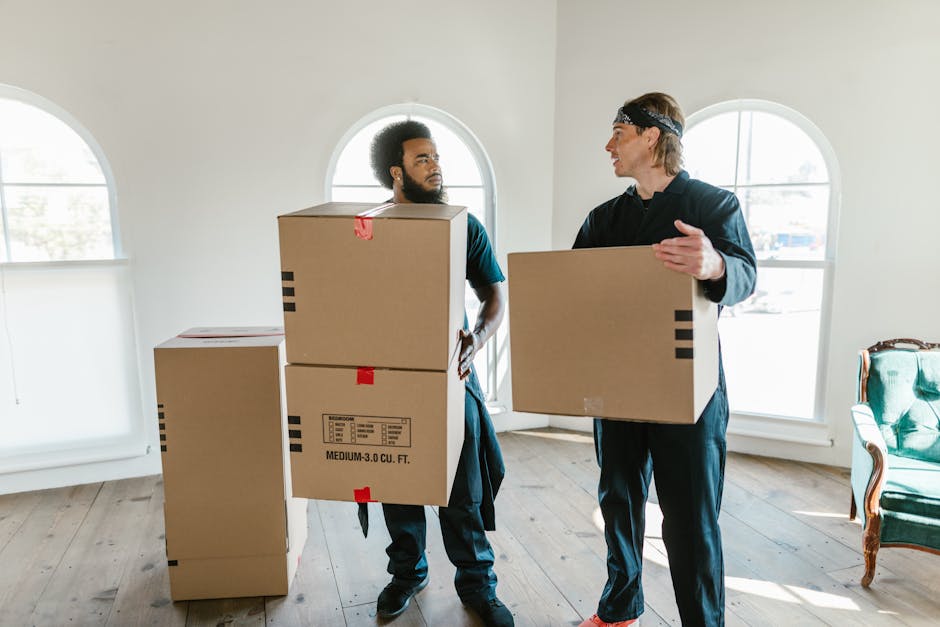
DIY vs pro movers: when to hire experts
Moving sounds simple enough at first. A van, a few boxes, some friends who "owe you one", and a Saturday that somehow disappears before lunch. But the truth is, DIY vs pro movers: when to hire experts is not just a money question. It is a time question, a risk question, and, for many people, a sanity question too.
If you are trying to decide whether to do the move yourself or bring in professionals, you are in the right place. This guide breaks down when DIY makes sense, when experts are worth every penny, and how to choose the right level of help without overpaying. We will look at costs, safety, packing, access issues, and those awkward little realities people only notice on moving day. You know the sort: the sofa that suddenly will not turn, the parking space that was never really a parking space, or the rain that starts just as the mattress reaches the pavement.
By the end, you should have a clear, practical way to judge what fits your move, your budget, and your stress tolerance. Let's keep it real and useful.
Quick takeaway: DIY can work for small, simple moves with flexible timing. Professional movers make more sense when the move is larger, more fragile, more urgent, or more complicated than a straightforward van load.
Table of Contents
- Why DIY vs pro movers: when to hire experts matters
- How the choice between DIY and professional movers works
- Key benefits and practical advantages
- Who this is for and when it makes sense
- Step-by-step guidance
- Expert tips for better results
- Common mistakes to avoid
- Tools, resources and recommendations
- Law, compliance, standards and best practice
- Options, methods and comparison table
- Case study or real-world example
- Practical checklist
- Conclusion
- Frequently asked questions
Why DIY vs pro movers: when to hire experts Matters
The choice between a DIY move and professional movers affects far more than the day itself. It changes how much lifting you do, how much planning you need, how likely it is that something gets scratched or delayed, and how drained you feel afterwards. A move that looks "cheap" on paper can become expensive very quickly if it takes three extra trips, damages furniture, or turns into a last-minute scramble for a bigger vehicle.
That is why this decision matters so much. There is no single best option for everyone. A one-bedroom flat with a lift and no bulky furniture is a different beast from a family house in west London with a narrow staircase, a heavy wardrobe, and a deadline that cannot move. In our experience, the real mistake people make is not choosing DIY or professionals. It is choosing based on the wrong factor, usually just the upfront price.
Think of it this way: DIY gives you control and can save money. Professional movers give you expertise, speed, and a buffer against stress. The right answer depends on how much complexity your move actually has. If you are moving a few bags across town, DIY might be perfectly sensible. If you are moving an entire household, handling fragile items, or trying to get everything done before keys are handed over, expert help starts to look less like a luxury and more like a practical safeguard.
There is also the human side. Moving day is tiring even when everything goes smoothly. Add a missed lift booking, a broken handle, or a friend who has to leave early because of work, and the whole thing can go sideways. To be fair, that is when people start saying things like, "We should have just hired movers in the first place."
How DIY vs pro movers: when to hire experts Works
The decision works best when you break the move into parts: packing, loading, transport, unloading, and reassembly. DIY means you take on most or all of those jobs yourself, possibly with a hired vehicle. Professional movers step in to do some or all of the work, depending on the service level you book.
DIY moving in plain English
DIY moving usually means you organise the boxes, pack your belongings, source a vehicle, recruit helpers, and manage the schedule yourself. Some people hire a van and do the lifting. Others use their own car for smaller moves and make several journeys. It can work well if the property is small, the distance is short, and you have enough hands to help.
The upside is obvious: you are in charge. You choose the pace, the packing method, and the budget. The downside is also obvious, though people tend to discover it about halfway through the day: moving large furniture is awkward, and it is very easy to underestimate how long loading and unloading really take.
Professional movers in plain English
Professional movers bring the vehicle, the labour, and the know-how. Depending on the service, they may also provide packing materials, dismantling and reassembly, and careful handling for awkward or fragile items. If you need a full-service move, they handle the heavy lifting while you focus on the admin, the keys, and the inevitable pile of "where on earth did I put that?" items.
Professional services are not all the same. A basic man and van setup can be ideal for smaller jobs, while a fuller removal service suits larger homes, office relocation, or any move where time and handling matter more than squeezing every possible pound out of the budget. If you want a broader look at service types, the company's removal services page is a useful place to understand the options available.
How the decision actually works in real life
The smartest way to choose is to compare the move against these factors:
- How much furniture you have
- How many flights of stairs are involved
- Whether parking is easy or awkward
- How fragile or valuable the items are
- How far you are travelling
- Whether you have help on the day
- How quickly the move must be completed
- Whether you can afford delays or damaged items
If several of those points feel messy, that is usually your answer. A move with one or two simple variables may be manageable on your own. A move with six or seven complications is the sort of thing where expert movers earn their keep.
Key Benefits and Practical Advantages
People often think the main benefit of professionals is convenience. That is true, but incomplete. The real value is that they reduce friction across the entire move. Less lifting. Less chance of damage. Less time wasted. Less mental load. And, often, less family tension, which is no small thing. Moving house has a way of bringing out everyone's inner project manager.
Benefits of DIY
- Lower upfront cost if you already have access to a suitable vehicle.
- Full control over timing and packing style.
- Flexible pace if you can spread the move over more than one day.
- Good for small loads such as a studio, student move, or a few large items.
Benefits of pro movers
- Faster loading and unloading thanks to experience and teamwork.
- Lower physical strain on you and your family.
- Better handling of bulky items like wardrobes, sofas, and appliances.
- Reduced risk of damage when items are packed and secured properly.
- Less stress on moving day because the hard labour is taken care of.
One thing people overlook is decision fatigue. By the time you have packed the kitchen, cancelled utilities, and labelled seventeen boxes of "miscellaneous", the last thing you need is to spend another hour wrestling a mattress through a hallway. Experts can prevent that final layer of exhaustion from turning the whole day sour.
When the value goes beyond money
Sometimes the best value is not a direct saving. It is avoiding a missed workday, avoiding a back injury, or avoiding the headache of trying to coordinate five friends who all arrive late and leave early. A good moving day feels almost boring in the best possible way. Things get loaded. They get delivered. You unlock the new place. Done. Lovely.
Who This Is For and When It Makes Sense
This topic matters to almost anyone moving home or premises, but the best choice depends on the shape of the move. Some people are ideal DIY candidates. Others are really not. And that is fine.
DIY usually makes sense if you are:
- Moving a small flat, room, or studio
- Only transporting a few items
- Moving locally with short travel time
- Confident handling furniture safely
- Working with a flexible timetable
- On a tight budget and willing to trade money for effort
Professional movers usually make sense if you are:
- Moving a house with multiple rooms
- Transporting heavy, fragile, or valuable items
- Facing stairs, tight access, or awkward parking
- Moving office equipment or commercial stock
- Under time pressure, such as a same-day key handover
- Managing the move with children, pets, or limited help
There is also a middle ground. Plenty of people do not need a full removal crew, but they do need a proper vehicle and someone who knows how to load it without wasting space. That is where a service like man and van can be a very sensible compromise. It is often the sweet spot for people who want help, but not a large-scale removals package.
For bigger house moves, especially where there are several bulky pieces and multiple trips would be a nightmare, a more structured option such as house removals is usually the cleaner choice. And if you are moving a workplace, the logic changes again. Business moves tend to reward planning and speed, which is why office removals are often better handled by professionals rather than improvised by staff.
Step-by-Step Guidance
If you are still torn, use this simple decision process. It keeps the choice grounded in reality rather than guesswork.
- List everything you need to move. Include furniture, appliances, boxes, plants, bikes, and any awkward items.
- Estimate the volume. A move that looks small in your head can be surprisingly large once it is in boxes.
- Check access at both properties. Stairs, parking restrictions, lifts, and narrow hallways all matter.
- Decide how much lifting you can safely do. Be honest. Your back will thank you later.
- Work out the timing. If you only have a narrow delivery window, DIY becomes more stressful.
- Compare the real cost. Include van hire, fuel, packing materials, lost time, and any extra trips.
- Choose the service level that matches the difficulty. DIY for simple jobs, professional help for complex ones, or a hybrid approach in between.
A simple rule of thumb
If the move can be done in one vehicle load, with easy access and a couple of strong helpers, DIY is often fine. If it needs careful packing, specialist handling, or more than one trip, experts begin to look much more practical. If you catch yourself saying, "It should be fine, I think," that is often the moment to pause and reassess.
How to decide in under five minutes
Ask yourself three questions:
- Can I lift the heaviest item safely?
- Can I get the vehicle close to the property?
- Can I finish the move without exhausting everyone involved?
If the answer is no to any two of those, hire experts. Easy as that. Well, not always easy, but clearer at least.
Expert Tips for Better Results
A good move is rarely about brute force. It is usually about preparation, timing, and a few small decisions that save a lot of bother later.
Tip 1: Do not let boxes get too heavy
This sounds obvious until you are packing books and suddenly every box weighs as much as a small piano. Keep heavy items in smaller boxes. Light items can fill the larger ones. Your movers, whether DIY or professional, will thank you for it.
Tip 2: Protect doorways and surfaces
Use blankets, covers, or simple protection around tight corners and high-traffic areas. A chipped wall or scuffed banister is annoying, and it is often avoidable. Professionals tend to build this kind of protection into their workflow automatically.
Tip 3: Label boxes by room and priority
Mark each box clearly and include a quick note like "open first", "fragile", or "kitchen". This is one of those small tasks that pays off again and again. Half the stress of unpacking is simply not knowing where anything went.
Tip 4: Book help early
Good movers get busy, especially around weekends, month-end dates, and school holiday periods. Leave it too late and you may end up paying more or settling for a less suitable option. That is one of those moving-day lessons people learn the hard way. A classic.
Tip 5: Match the vehicle to the job
Choosing a vehicle that is too small creates extra journeys and extra fatigue. Choosing one that is too large can make urban access harder, especially in London where parking can be a proper puzzle. If you need a dedicated transport option, take a look at the company's removal van and moving truck services to understand what different vehicle sizes are designed for.
Also, pack the van properly. Heavier items should go in first and be secured against movement. Softer items can fill gaps, but never leave loose space if you can avoid it. The van should feel like one solid, stable load, not a moving game of Jenga.
Common Mistakes to Avoid
Most moving problems are not dramatic disasters. They are just a chain of small avoidable mistakes. The kind that start with "it will probably be fine" and end with everyone standing in the hallway in silence.
- Underestimating the amount of stuff. The spare room, loft, and cupboard under the stairs all count.
- Forgetting access issues. Tight staircases and parking restrictions can turn a simple move into a slog.
- Using too few helpers. Two people may be fine for boxes, not for a fridge.
- Not protecting fragile items properly. A blanket is not always enough.
- Packing too late. Last-minute packing is where bad decisions breed.
- Choosing the cheapest option without checking what is included. Hidden extras can erase any savings.
- Ignoring insurance and safety details. If something goes wrong, you want to know where you stand.
Another common mistake is assuming your friends will be available and energetic the whole day. They may absolutely mean well. But by 2:30pm, with one person on their third cup of tea and another mysteriously absent, the "free labour" plan can look less clever.
What to do instead
Plan for a little more time than you think you need. Keep snacks, water, and phone chargers handy. Clear hallways early. And if the move is getting complicated, stop trying to force a DIY solution out of stubbornness. That is usually where expert help saves both the day and the mood.
Tools, Resources and Recommendations
You do not need a warehouse full of equipment to move well, but the right basics make a big difference. Even on a modest move, a few practical tools can reduce lifting strain and speed everything up.
Useful DIY moving tools
- Strong boxes in mixed sizes
- Packing tape and a dispenser
- Marker pens for labelling
- Furniture blankets or covers
- Straps or ropes for securing items
- Trolley or sack truck for heavier boxes
- Gloves with grip
Useful professional moving support
If you want a full-service approach, look for services that can combine transport, loading, and packing support. For example, packing and unpacking services can take a huge amount of pressure off the day itself, especially for larger homes or busy families.
For household projects where furniture needs to move but the job is not a full house relocation, services such as furniture pick-up can be a practical fit. And if you are searching around for the right level of help, the broader removals page gives a useful sense of the full service range.
Planning tools worth using
A simple room-by-room inventory list is one of the best tools you have. So is a floor plan sketch, even a rough one. It helps you see whether the sofa actually fits through the door before you arrive with six people and a lot of hope.
For larger relocations, especially in London where timing and access can be awkward, it can help to ask about parking, arrival windows, and any extra handling needs in advance. The stronger the planning, the smoother the day usually feels.
Law, Compliance, Standards and Best Practice
For most home moves, there is no complex legal process attached to choosing DIY or pro movers. But there are still important standards and good-practice points to keep in mind, especially if you are moving valuable items, using hired labour, or dealing with commercial premises.
Safety and duty of care
Anyone lifting and carrying heavy items should do so safely and sensibly. That means using proper technique, avoiding rushed lifts, and not pretending a wardrobe is "not that heavy" when it clearly is. Businesses have a particular duty to manage moving risks carefully, but even at home it is wise to treat heavy lifting with respect.
Insurance and item handling
Before booking any mover, check what level of cover is included and what is excluded. This is especially important for fragile, high-value, or sentimental items. If something matters a great deal to you, ask how it will be protected and how claims are handled if damage occurs. Clear questions now can save an awkward conversation later.
Consumer expectations
Whether you are hiring a small man and van service or a larger removal company, clarity matters. You should understand the service scope, timing, price structure, and any extra charges before the move begins. Good providers will explain this upfront, and the best ones make it feel straightforward rather than pushy.
For wider company policies and service terms, it can also help to review pages like insurance and safety, payment and security, and terms and conditions. That does not make a move exciting, obviously, but it does make it clearer and safer.
Best practice in one line: understand what is included, know how items will be handled, and never assume the cheapest quote is the best value.
Options, Methods, or Comparison Table
If you are weighing the options, this comparison can help you see the trade-offs more clearly. It is not about picking a winner every time. It is about picking the right fit for the job in front of you.
| Option | Best for | Main advantages | Main drawbacks |
|---|---|---|---|
| Full DIY move | Small, local, low-complexity moves | Lowest upfront cost, full control, flexible timing | Heavy lifting, higher stress, more time, more risk of damage |
| DIY with hired van | Moderate moves with help available | Still relatively affordable, more space, one-trip efficiency | Requires driving, loading skill, and organised helpers |
| Man and van | Smaller household moves or single-item transport | Good balance of cost and convenience, less physical strain | Not always ideal for large homes or complex access |
| Full professional removals | Large, fragile, urgent, or complicated moves | Fast, organised, lower stress, expert handling | Higher cost than DIY |
The middle options are often where the best value lives. A lot of people do not need the biggest service, but they also do not need to do everything themselves. That is why services like man with van or man and van removals can be a neat, practical compromise.
Case Study or Real-World Example
Imagine a couple moving from a third-floor flat in Clapham to a house in Balham. They have a bed frame, a sofa, a dining table, boxes of books, a washing machine, and a kitchen full of oddly shaped things that never pack as neatly as you expect. At first, they think DIY will save money. They borrow a van, recruit two friends, and plan to do it in one day.
By mid-morning, the problem is obvious. The sofa is awkward on the stairs. The washing machine needs two strong people and better straps. One friend has to leave for work at 2pm. The parking outside the new place is tighter than expected. Nothing catastrophic has happened, but the whole day is taking on that slow, sticky feeling that moving sometimes gets. You know it when you feel it.
Now imagine the same move with professional help. The right team arrives, understands the access issues, loads strategically, and gets the bulky items moved without a long series of false starts. The couple still has admin to do, but the hard physical work is handled quickly and calmly. The day becomes manageable instead of miserable.
That does not mean everyone should hire movers. It means the more complicated the move, the more the value of expertise grows. For a couple of boxes and a chair, DIY is fine. For a full flat with stairs, heavy furniture, and a deadline, the professional option starts to look like common sense, not indulgence.
Practical Checklist
Use this checklist before you decide.
- Have I listed every item that needs moving?
- Do I know how much space the load will take?
- Are there stairs, lifts, or parking restrictions?
- Can I safely lift the heaviest items?
- Do I have enough help for the whole day?
- Have I allowed enough time for loading and unloading?
- Do I need packing support or disassembly help?
- Have I checked what insurance or cover is included?
- Do I know the total cost, including van hire and fuel if DIY?
- Would a hybrid option save me time and stress?
Decision shortcut: if your checklist reveals more than a couple of unknowns, expert movers are usually the safer bet. That simple. No shame in it either.
Conclusion
Choosing between DIY and professional movers is really about balancing cost, complexity, and peace of mind. DIY can be perfectly sensible for smaller, simpler moves where you have time, help, and a suitable vehicle. Professional movers make far more sense when the job is heavy, urgent, fragile, awkward, or likely to eat your entire weekend if you try to handle it alone.
The best decision is the one that fits the move in front of you, not the one that sounds cheapest at first glance. Be honest about the size of the job, the access, the lifting, and how much energy you actually want to spend. Sometimes a little expert help turns a stressful day into a smooth one. And that, frankly, is worth a lot.
So if you are still weighing it up, take a breath, make the list, and choose the option that gives you the clearest path on moving day. Calm is underrated.
Get a free quote today and see how much you can save.
Frequently Asked Questions
Is DIY moving always cheaper than hiring movers?
Not always. DIY can be cheaper upfront, but once you add van hire, fuel, packing materials, extra trips, and lost time, the gap can shrink quickly. For bigger or more complex moves, professional help can end up being better value overall.
When should I hire professional movers instead of doing it myself?
Hire experts when the move involves heavy furniture, stairs, fragile items, poor access, a tight deadline, or a lot of belongings. If the job feels like it could easily overrun, that is usually a good sign to bring in help.
What size of move is suitable for a man and van service?
A man and van service is often a good fit for small house moves, student moves, single-item transport, and shorter local jobs. It is a useful middle ground when you do not need a full removals crew but still want support with loading and transport.
Do professional movers pack for you?
Some do, some do not. Packing support is often available as an added service, and it can save a huge amount of time. If you want help with wrapping, boxing, or unpacking, ask about it early so the service can be planned properly.
How do I know if my furniture is too heavy for DIY?
If you need more than two people to lift it safely, or if you cannot carry it comfortably through a doorway or down stairs, it is probably too heavy for a casual DIY approach. Fridges, wardrobes, sofas, and washing machines are common examples where professional help is worth considering.
Is it risky to move without professional insurance?
It can be. Every move carries some risk of damage or injury, and insurance helps protect you if something goes wrong. Before booking any mover, check what cover is included and what exclusions apply, especially for valuable or fragile items.
How far in advance should I book movers?
As early as you can, especially for weekends, month-end dates, and busy moving periods. Leaving it late can reduce your choices and make the move feel rushed. Early booking is one of the easiest ways to keep things calmer.
Can I combine DIY with professional help?
Yes, and it is often a smart approach. You might pack yourself, then hire movers for the loading and transport. Or you might move small items yourself and leave the bulky furniture to professionals. The hybrid option is often the sweet spot.
What should I check before hiring a removals company?
Check the service scope, pricing, timing, insurance, and how fragile items are handled. It also helps to review the company's terms and conditions and understand any extra charges before the move starts. Clear expectations prevent most headaches.
Are professional movers worth it for short-distance moves?
Often, yes. A short distance does not always mean a simple move. If the access is awkward, the items are heavy, or the timing is tight, professionals can still be worth it because they save time and reduce stress.
What is the biggest mistake people make when choosing DIY over experts?
The biggest mistake is underestimating the hidden effort. People often focus on the vehicle cost and forget about lifting, packing, access issues, and the time it takes to do everything properly. That is where the real difference shows up.
How do I make the move day less stressful if I choose DIY?
Start early, label boxes clearly, keep heavy items in smaller boxes, and make sure you have enough help. Protect surfaces, plan parking, and leave extra time for delays. If the move starts to feel too big, do not be afraid to pause and bring in expert help.